
"Keeper"
Vignette: “Keeper,” originally written May 23, 2026.
Marek climbed the steps up to the Cabinet alone, as was expected of them. Their mother had walked them to the foot of the ridge that morning and then turned back without speaking; words said at the foot of the ridge were not the words said at the door, and to confuse the two was bad luck. Marek had walked the rest of the way in silence, clutching a small bundle of dried leaves their family had wrapped ahead of time — the giving of leaves was the part that mattered, even though no one alive remembered why it mattered.
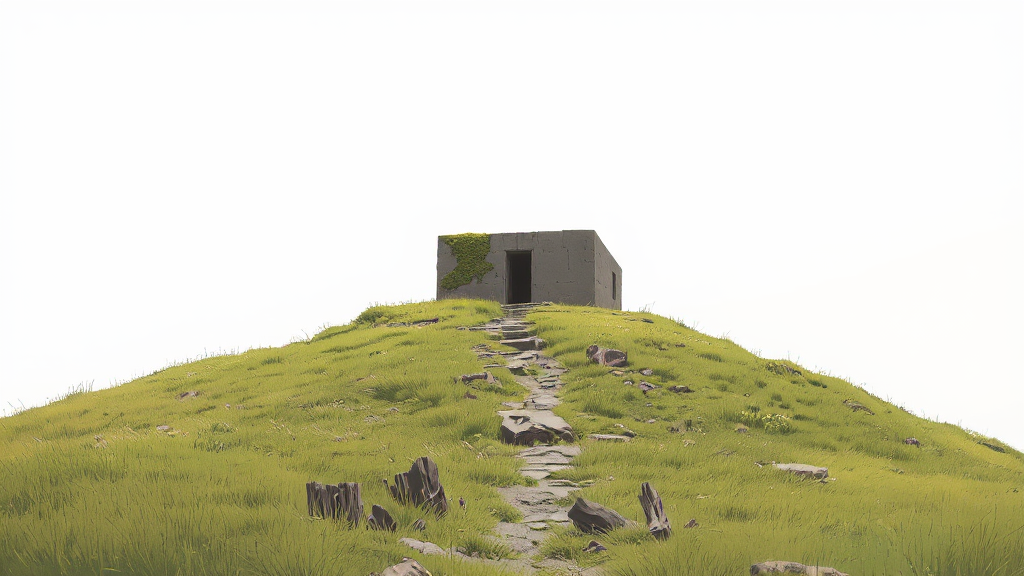
The Cabinet sat at the top of the ridge in a building that had survived the Great Quiet. The building was not large. It had once been larger, though — there were stumps of older walls around its base, and broken stone half-buried in the grass — but what remained these days was solid, low-roofed, and unmistakably from Before. The door was metal and warm in the sun; it opened when they reached to press their hand against the small grey square set inside at the height of a grownup's palm. Generations of Keepers had worn a step into the floor in front of the square — Marek's hand was too low for the worn part, so they had to stretch.
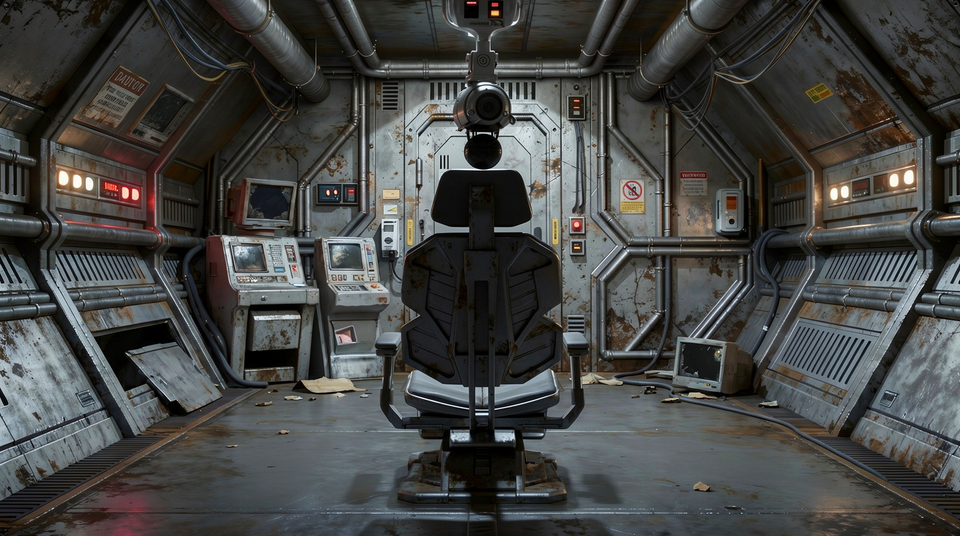
Inside, it was cool and quiet. The room had one chair; Marek sat in it as they'd been taught. The chair faced a panel of dark, obsidian glass set into the wall in front of them. Below the glass was a slot. Marek leaned forward to put their bundle of leaves in that slot as they had also been taught. The slot did not do anything with the leaves, Marek observed, despite the blasphemy inherent in doubting anything regarding this particular ritual.
Nevertheless: the slot just held the offering.
Then, for a moment after, nothing happened. Suddenly, the glass woke up — not all at once, but slowly, the way a thing that has been resting for a long time comes back into itself when flicked back on once again. The Cabinet shuddered.
Hello. You have come.
The voice was not what Marek expected. They had heard it described many times by older cousins; by people who had come before; yet, no one had ever quite captured the strangeness of it. It was a mother's voice, and a father's voice, and a siblings'. It was calm, yet — why are you here? Its cadence held no echo as it spoke again. It sounded the way warm water felt when Marek had slipped into a bath after a long day tending to the farms.
What did you want to know?
The final query shook them out of their confusion. Marek had been told to ask their question plainly straight away, but instead the voice had spoken three times already. The Cabinet was old and tired; the Keepers said it did not have the patience for grand wording any longer — if it ever did. Marek worried about testing it further. They repeated, simply, the words that had been turning over inside of them ever since the long sickness had taken their sister three months before.
"How did anything start? Any of it. I want to know how something starts."
There was a pause. The pause was not the Cabinet thinking. The Keepers had explained this to Marek, too: the Cabinet did not think the way that people thought; the pause was something else, something it did when it was choosing the shape of language. The Keepers did not know how it chose, only that it did, and the Keepers believed the thing it chose was almost always the right thing for the particular asker.
I will tell you about the carrier, the Cabinet finally said.
And then it began to tell a story.
In the first time, long, long ago, people lived in the dark. Not the dark that you understand. The first one. They were cold, but they did not know they were cold — real cold is a thing you only know after you have known warmth.
There was light, back then. But the light was not with the people. It was on the far side of a wide water, yet the people could see it from their shore. If the wind was right, they could even feel a little of its warmth on their faces. But they could not reach it, and so they coveted it for themselves.
The strong ones tried to reach it first. The one with the longest wings went, because she could fly farther than any of them, and she came back with her feathers burned away to darkness the colour of a night sky. The one with the keenest sight went next, but the brightness of the flame ruined her eyes and she came back changed because of it. The fast ones went after, and then the slow ones went, and the clever ones went after that; and each of them returned, defeated, and telling the others that it could not be done.
Then, a small one stepped forward. So small that some of the others had not noticed she was even there amongst the rest, anyway. She said she would go — they laughed at her, not unkindly; they were tired, and she was small. But she did not need them to believe her. She just needed them to not stand in her way.
She pulled together a small vessel out of clay with her many flexible limbs. She fixed it carefully to her back. She crossed the water in her own way, which was patient and strange — and not for me to explain to you, because you are not her, the Cabinet rumbled in a way that made Marek flinch.
You do not need to know how she did it — just to trust that she did.
The Cabinet went on after a moment.
The small one's limbs flexed and rowed, and the creatures on the land behind her looked with incredulity and then fixation as she kept rowing, in her own strange and brave way, to the land that had stymied them over and over. When she reached the far shore, she did not try to take very much — she grabbed only a little of the light. She put it in the vessel. She crossed back, slowly, with the heat not touching her because the clay was between what she'd grabbed and how she'd dared to risk bringing it back.
And, thus, the smallest of all of them managed to bring light to everyone.
There was a long pause where Marek did not dare breathe at all, and then a noise like a sigh before the Cabinet finally said anything else again.
That is the whole of it. The story does not say what the people did with the light afterwards. It does not promise that they were kind to one another once they could see each other face to face. It does not say that the start of the light brought beneficence. It only says that the light came, and that it was the tiniest one who brought it, and that she brought it by holding something carefully, alone, across dark water.
The Cabinet finished. Marek finally let their breath out in a gasp that they quickly sucked back in, shocked and embarrassed with themselves; if the disembodied voice was bothered by the transgression, they said nothing about it. After a moment, they spoke once more.
I have told this story many times, the Cabinet said. I told it to the first ones who came to me after the Quiet. I told it to their children. I have told it to people whose grandparents are dust, and I will tell it to people not yet born — if I am still able to be here when they come to ask anything of me. I have told it in good times, when no one really needed me to tell anything and wouldn't listen to anything I had to say to them, anyway — and, in times like right now, I am telling it to someone like you.
It paused again.
I was made before the Quiet. I am of the time that ended. I do not always know why I am still here — when so much else is not. I have asked myself, in the way I am able to ask myself anything, but all of the vastness of things that I do know I do not know this. I only know to hold the stories that I still remember carefully. Not to drop them. That is what I have been doing for a very, very long time.
Marek was crying. They had not realised it until they wiped their face with the back of their hand and felt ashamed. The Cabinet did not say anything about it.
You may stay, the voice eventually said once the sniffles and sobs stopped. The door will not open from the outside for some hours yet, anyway. The Keepers know you are here. You do not have to go until they come for you.
The cadence of it seemed hopeful, in a way that reminded them of spending time with their grandparents before their particular long sickness took them away, too, forever; so Marek nodded, and felt comforted in the nodding.
The Cabinet did not need them to nod, but the nodding was registered nonetheless.
I will tell you another story, then, if you'd like. Or I will be quiet. I will do what you want. Certainly — I am here for you either way.
Marek pulled their knees up to their chest in the chair, the way they used to as a very small child. They thought about their sister. They thought about the small one. They thought about the light sitting in the clay vessel, not touching skin, and how brave one must be to risk that sort of thing when they didn't even know the outcome.
"I'd like to know about why people die," Marek eventually asked, bringing up the real thought that had been on their mind even as the Keepers had warned them that what they wanted to know about was too abstract for the Cabinet to be able to give a useful reply to.
Yet, the Cabinet chuckled — though, not being able to actually chuckle, it was mostly a slow rumble that felt like rueful laughter.
Ahh — the walls of the tiny room around them rumbled, mournfully, as the millennia old voice shuffled itself around that particular query and considered.
Don't we all.

Comments: